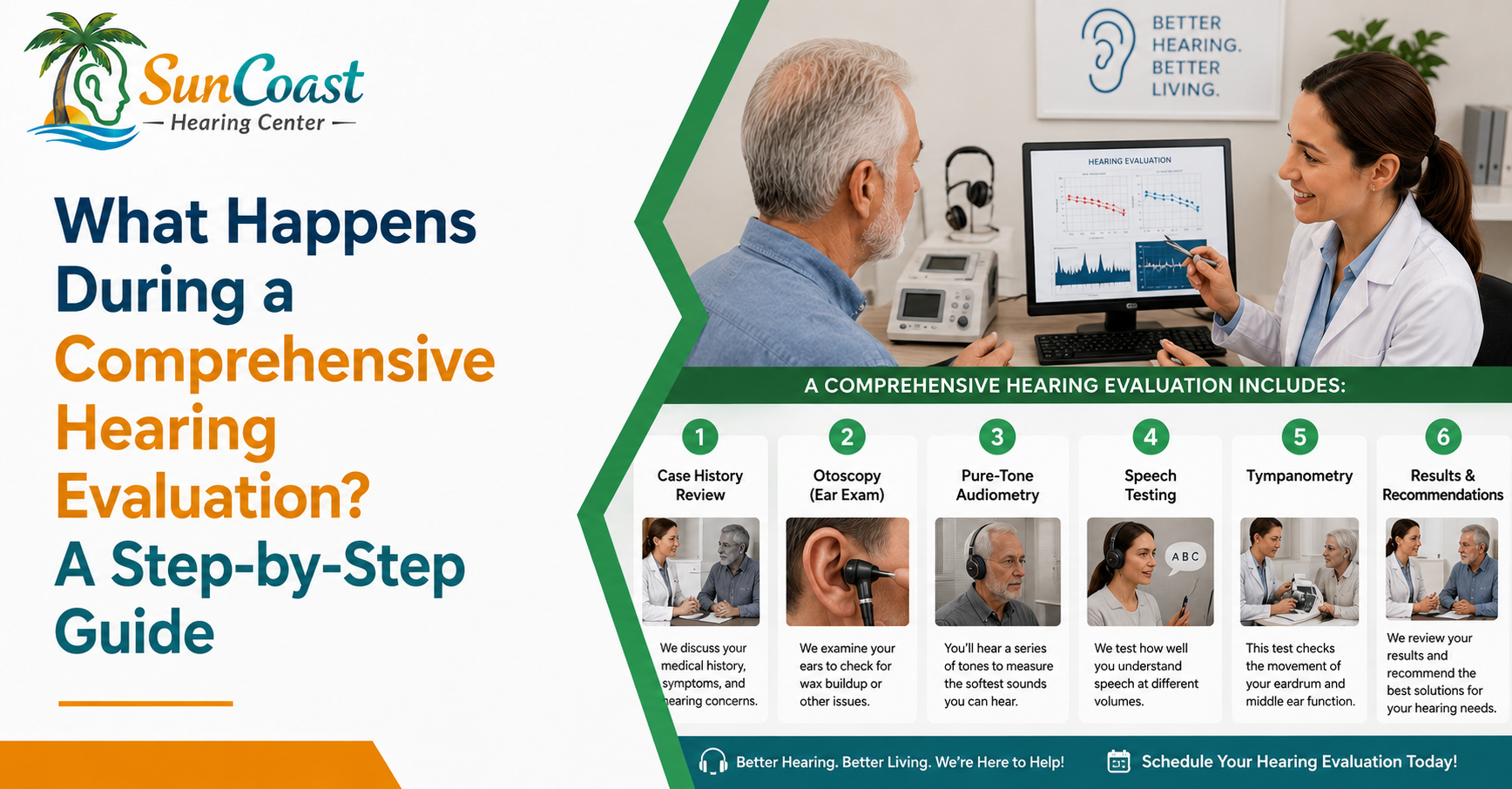
A comprehensive hearing evaluation is a thorough analysis conducted by a hearing specialist to assess your level of hearing, possible problems, and offer suitable treatment. During the evaluation, your hearing history, physical ear exam, hearing and speech test, and test result discussion may be included. This evaluation will help you know what kind of hearing loss problem you have. It will give you information about your hearing health that you might not know before. It can even save your life when done early because you can prevent hearing problems before they happen.
Key Points
- A comprehensive hearing evaluation aids in identifying hearing problems accurately.
- The whole process involves no pain and invasive procedures and usually lasts for one hour only.
- More than one hearing test is conducted during this evaluation to understand your hearing capabilities.
- Detecting any hearing problem early may result in successful treatment.
- It will help your specialist decide on hearing treatment for you.
What to know?
Changes to our hearing abilities tend to happen slowly, and many do not immediately realize that their hearing is changing. A comprehensive hearing evaluation gives a full view of one’s hearing status.
A comprehensive hearing assessment goes beyond the standard hearing test in that it consists of various tests aimed at assessing your hearing ability and speech recognition capabilities. These tests give hearing specialists information on what is going on and help diagnose any problems present.
A comprehensive hearing assessment can be undertaken by individuals who have trouble hearing or understanding speech, suffer from tinnitus, or simply want to monitor their hearing status.
Getting acquainted with the hearing evaluation will ease stress and motivate people to visit hearing specialists.
Important Factors
Several key components are involved in a professional hearing evaluation.
Step 1: Review of Medical and Hearing History
The appointment usually begins with a discussion about your hearing concerns and overall health.
Topics may include:
- Hearing difficulties
- Exposure to loud noise
- Family history of hearing loss
- Ear-related medical conditions
- Tinnitus symptoms
Step 2: Physical Ear Examination
The hearing specialist examines the ears using specialized equipment to check for:
- Earwax buildup
- Ear canal blockages
- Signs of infection
- Structural abnormalities
Step 3: Diagnostic Hearing Tests
A comprehensive hearing evaluation often includes several hearing assessments.
Common tests include:
- Pure tone audiometry
- Speech recognition testing
- Bone conduction testing
- Tympanometry when necessary
Step 4: Review of Results
After testing, the hearing specialist explains the findings and discusses any recommended treatment options.
Benefits / Advantages
A comprehensive hearing evaluation offers numerous benefits for hearing health and overall well-being.
-
Accurate Diagnosis- Detailed testing provides a clear understanding of hearing performance and identifies any hearing concerns.
-
Early Detection of Hearing Loss- Finding hearing problems early often leads to more successful treatment and management options.
-
Personalized Treatment Recommendations- The results help hearing professionals develop customized care plans based on individual needs.
-
Improved Communication- Understanding hearing challenges can lead to solutions that improve speech understanding and daily conversations.
-
Hearing Health Monitoring- Routine evaluations establish a hearing baseline and help track changes over time.
-
Better Quality of Life- Addressing hearing concerns can improve social interactions, workplace communication, and overall confidence.
Why It Matters?
Hearing plays a critical role in communication, relationships, and everyday activities. When hearing difficulties go undetected, they can gradually affect many areas of life.
A professional comprehensive hearing evaluation helps identify hearing concerns before they become more severe. Early diagnosis allows hearing specialists to recommend appropriate interventions and monitor hearing changes over time.
Many individuals delay hearing testing because they believe hearing loss is a normal part of aging. While age-related hearing changes are common, a professional evaluation can determine whether treatment may improve hearing performance.
Regular hearing assessments support proactive healthcare and help individuals maintain better communication and independence throughout life.
Common Mistakes to Avoid
Many people unintentionally delay proper hearing care.
-
Waiting Until Hearing Problems Become Severe - Early symptoms are often easier to manage when addressed promptly.
-
Assuming Hearing Changes Are Temporary- Persistent hearing difficulties should always be evaluated by a professional.
-
Skipping Routine Hearing Checkups- Regular testing helps identify subtle hearing changes that may otherwise go unnoticed.
-
Ignoring Tinnitus Symptoms- Ringing or buzzing in the ears can sometimes indicate underlying hearing concerns.
-
Not Following Through on Recommendations- A comprehensive hearing evaluation is most effective when patients follow professional guidance regarding treatment and follow-up care.
Expert Insights
Hearing professionals recommend routine hearing evaluations as part of overall health maintenance, especially for adults over age 50 and individuals exposed to frequent noise.
Experts emphasize that hearing loss often develops gradually, making professional testing essential for early detection. A comprehensive hearing evaluation provides objective information that cannot be obtained through self-assessment alone.
Audiologists also recommend establishing a hearing baseline even if no symptoms are present. Baseline testing allows future hearing changes to be monitored more accurately.
Patients who undergo regular hearing evaluations are often better prepared to address hearing concerns before they affect communication, relationships, and quality of life.
Frequently Asked Questions
How long does a comprehensive hearing evaluation take?
Most evaluations take between 45 and 60 minutes, depending on the individual's symptoms and the specific tests required.
Is a comprehensive hearing evaluation painful?
No. The evaluation is completely non-invasive and painless. Patients simply listen to sounds and respond during testing.
What can a hearing evaluation diagnose?
A hearing evaluation can identify hearing loss, speech understanding difficulties, tinnitus-related concerns, and other hearing-related conditions.
How often should adults have their hearing tested?
Many adults benefit from testing every few years, while older adults and individuals with hearing concerns may need more frequent evaluations.
Do I need hearing aids after a hearing evaluation?
Not necessarily. Treatment recommendations depend on the results and may include hearing aids, hearing protection strategies, monitoring, or other hearing care options.
Final Takeaway
A comprehensive hearing evaluation is one of the most effective ways to understand your hearing health and identify potential concerns early. Through detailed testing, professional analysis, and personalized recommendations, hearing specialists can help patients make informed decisions about their hearing care. Whether you are experiencing hearing difficulties or simply want to establish a baseline for future monitoring, a professional hearing evaluation is an important step toward better hearing wellness. At Suncoast Hearing Center, patients receive expert evaluations, advanced diagnostic testing, and personalized hearing care solutions designed to support lifelong hearing health.