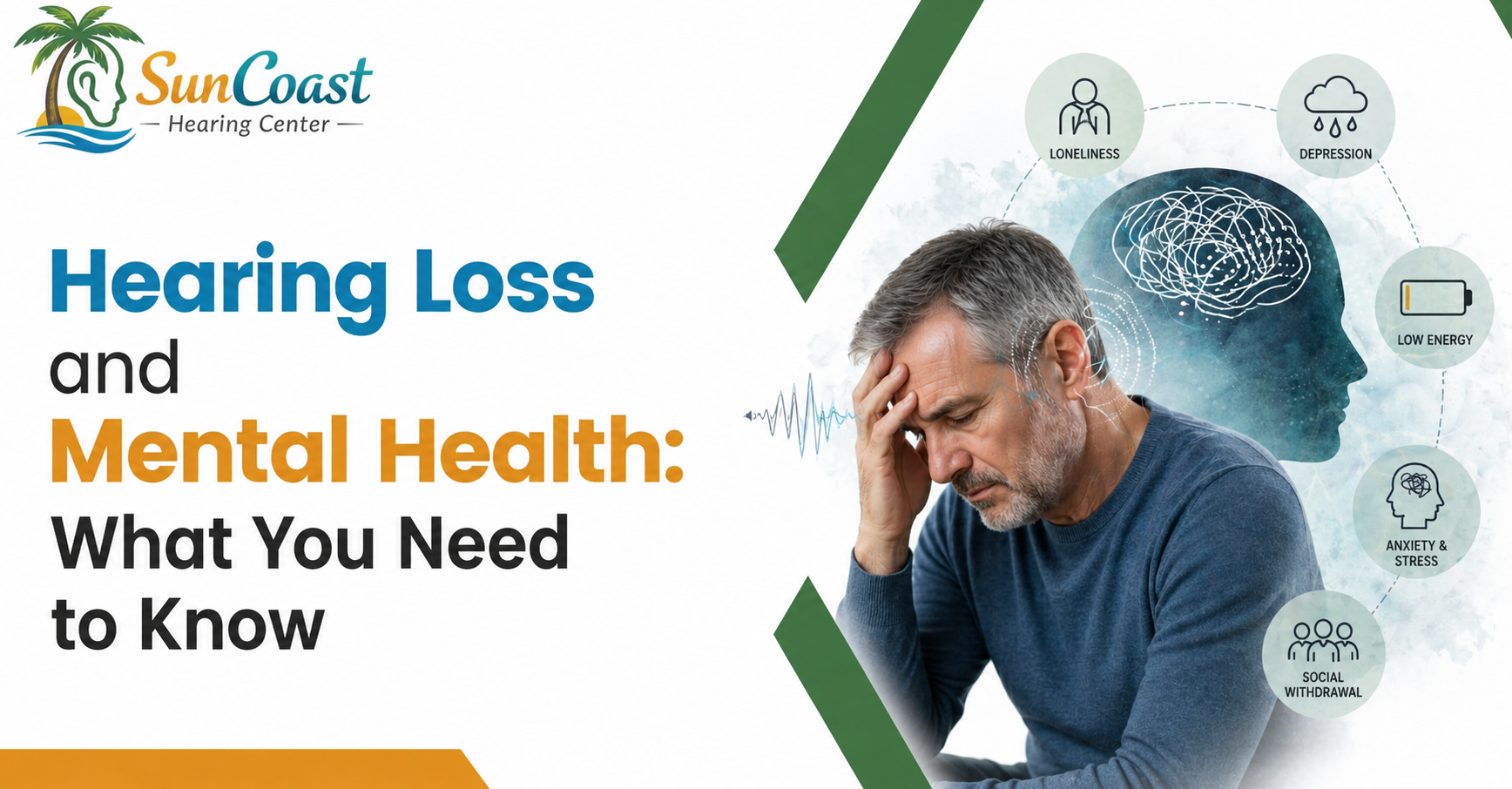
Hearing is an important part of our social interaction, communication, and interaction with the world. Hearing loss can extend way beyond not hearing sounds when it starts to impact daily life. It can be profoundly and long-lastingly affecting emotional health and psychology.
The fact that most people do not recognize the strong connection between and isolation, stress, and even depression. This is an interrelation that you can proactively use to safeguard your hearing as well as your mental health.
Emotional Effects of Hearing Problems
Hearing loss has slow emotional impacts that may end up being overwhelming with time. With more complications in communication, people might start to experience mood and confidence changes.
Feelings of Frustration and Irritability
It may be frustrating to struggle to keep up with conversations or to keep on requesting people to repeat themselves.
- Problem with comprehension of speech.
- Experience of being excluded during conversations.
- Greater impatience with social situations.
Lack of Trust in Communication
When hearing is reduced, most individuals lose self-confidence to communicate with others.
- The fear of uttering something wrong.
- Shy to talk in groups.
- Shy in social life.
High Risk of Anxiety
Having untreated hearing loss can bring about insecurities and pressure, particularly in new surroundings.
- Concern with not getting essential information.
- Shyness in social life.
- Always straining to listen.
Isolation in Society and Its Mental Health Impact
Social withdrawal is one of the gravest effects of hearing loss, and it may directly affect mental health.
Avoiding Social Situations
When communication proves to be tough, individuals tend to avoid meetings and discussions.
- Skipping family events
- Avoiding group discussions
- Decreased social interaction.
Feelings of Loneliness
Poor communication may cause one to feel like he or she has no association with the rest.
- Lonely in the midst of the people.
- Absence of meaningful dialogues.
- Loved ones: Emotional distance.
Link to Depression
Research has revealed that there is a high relationship between untreated hearing loss and depression.
- Constant depression or a bad mood.
- Decreased interest in activities.
- Loss of enthusiasm and vitality.
Cognitive Strain and Mental Fatigue
In addition to emotional impacts, hearing loss also imposes an extra burden on the brain, impacting mental clarity and focus.
Increased Listening Effort
The mind is forced to work more to interpret the incomplete sounds, resulting in mental fatigue.
- Difficulty concentrating
- Fatigue after conversations
- Reduced productivity
Effect on Memory and Thinking.
When the brain is concentrated on hearing, it is not able to do other activities.
- Losing the flow of discussions.
- Trouble retaining information
- Slower decision-making
Speech Understanding Problems
Deafness can be characterized by hearing impairment that may not be related to volume but rather the ability to decipher speech.
- Misunderstanding words
- Difficulties in noisy places.
- Late reaction in dialogues.
A Degree of Action to Improve Hearing and Mental Wellness
Early intervention of hearing loss can help a lot both in communication and mental well-being. It is critical to get timely care to ensure overall health.
Importance of a Hearing Test
An early diagnosis can be achieved by scheduling a hearing test in a reputable hearing clinic near me.
- Determines the degree of hearing loss.
- Helps make suitable treatment.
- Prevents further decline
Exploring Hearing Loss Treatment Options
The contemporary hearing loss treatment options are meant to enhance clarity of hearing and alleviate mental burden.
- Advanced hearing aids
- Personalized hearing solutions
- Better speech understanding
Hearing Care Services
A hearing care center provides professional advice and treatment by consulting a qualified audiologist.
- Availability of high-quality audiology care.
- Frequent check-ups and follow-ups.
- Improved quality of life
Conclusion
Hearing loss has a strong relationship with mental health and cannot be ignored. It can profoundly influence emotional well-being, as untreated hearing problems may lead to increased stress and anxiety, social isolation, and depression.
Early intervention as a result of appropriate diagnosis and treatment can assist in regaining confidence, enhancing communication, and improving overall mental health. At Suncoast Hearing Center, clients are provided with caring services, professional assessments, and solutions that are tailor-made to address hearing difficulties. You or someone you love has symptoms? Don’t delay; first, put your hearing health first and make the first step towards a healthier and more connected life.