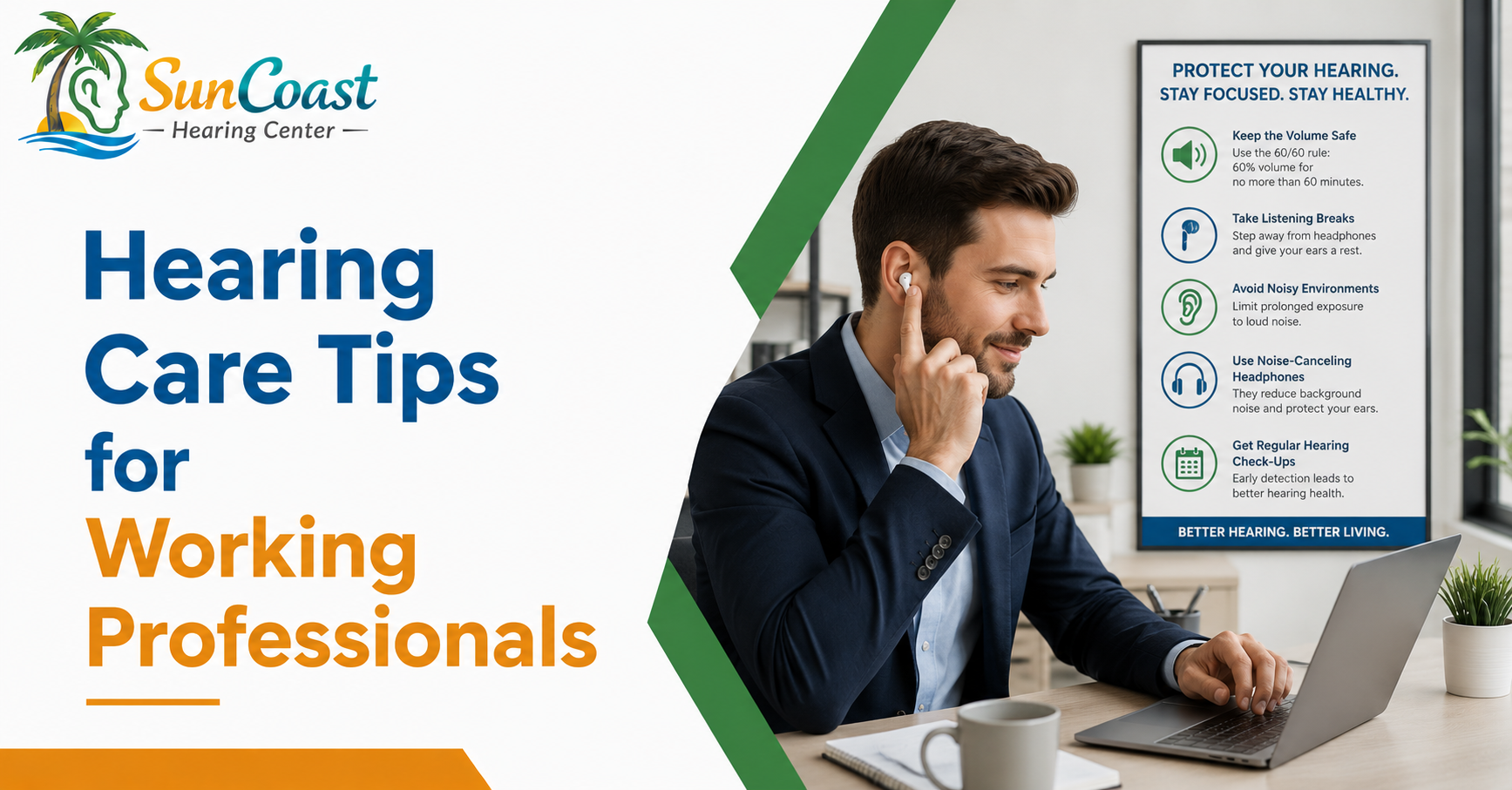
With the prevailing rapid work pace, a person's hearing health is frequently ignored. Hearing may become affected over time, though it's difficult to notice at first, due to long hours of listening to music through headphones, constant noise, and high stress. With the right Hearing Care Tips, working professionals can take steps to safeguard their hearing and ensure they can communicate and function more effectively in their everyday lives.
No matter how busy you are in the office, industrial, or remote environment, it is important that you take proactive steps to protect your hearing. Adopting simple lifestyle changes and ways to prevent complications will go a long way in maintaining good hearing health.
Protect Your Ears from Workplace Noise
Among the most crucial Hearing Care Tips is to reduce exposure to loud noise at work. Prolonged exposure to noise can result in damage to the delicate structures of the ear over time.
Wear Hearing Protection as Needed
Ear protection should be used first by professionals who work in noisy environments to minimize the risk of hearing damage.
- Wear earplugs or noise-canceling earmuffs.
- Use equipment protection at the job site or machine.
- Minimize exposure to loud noises.
Keep Headphone Volume at Safe Levels
Exposure to noise at high levels for extended periods of time can add to hearing loss.
- Use headphones that are 60/60 compliant:
- Don't play at maximum volume settings.
- Make regular listening breaks.
Limit Exposure to Loud Environments
Loud spaces can cause the clarity of hearing to diminish over time.
- Do not be exposed to loud noise for long periods of time.
- Avoid using noisy equipment if possible.
- If possible, select a quiet work area.
Maintain Healthy Listening Habits
A good way to practice effective Hearing Care Tips for professionals is to develop healthy listening habits.
Take Breaks from Continuous Audio Use
Regular use of headphones or earbuds can cause ear fatigue and ear strain.
- Provide rest for the ears during work hours.
- Don't wear earbuds for 24 hours.
- Minimize unwanted sound exposure.
Pay Attention to Early Warning Signs
Early detection of the signs of hearing loss can help avoid further problems.
- Difficulty hearing conversations
- Ringing in the ears
- Continuously adjusting the volume of the device.
Have regular hearing checkups
One of the best Hearing Care Tips for long-term hearing health is routine hearing evaluations.
- Identifies hearing difficulties at an early age
- Helps prevent severe hearing loss
- Clear out earwax. Helps with hearing control.
Improve Workplace Communication
Effective communication is key to career success, and practical Hearing Care Tips can help enhance work relationships.
Minimize background noise in meetings
It can be hard to hear others in noisy situations.
- Select a quiet area or room for meetings.
- Reduce unnecessary distractions.
- For virtual meetings, use good-quality audio equipment.
Practice Active Listening
When talking to others, pay attention to them completely in order to communicate better without misunderstanding.
- Make eye contact when talking.
- Clarify if necessary.
- Don't listen to music while you're writing, reading, or doing anything else.
Use Technology to Support Hearing
The use of modern tools can facilitate communication between professionals in various situations.
- Make use of the captioning options during meetings.
- Adjust audio for clarity.
- Discuss with the child about hearing assistance devices (HADs) if necessary.
Provide Heneral Assistance to Overall Hearing and Wellness
General health is also a factor in hearing protection. To improve hearing health and overall health, try these tips for a balanced lifestyle.
Manage Stress Levels
When under stress, it's hard to concentrate and can even worsen the symptoms of tinnitus.
- Practice relaxation techniques.
- Keep a balanced work-life.
- Get frequent breaks while working.
Living a Healthy Lifestyle
Proper blood circulation to the ears and auditory system is a result of good physical health.
- Eat a balanced diet.
- Stay physically active.
- Steer clear of smoking and overindulgence in alcohol.
Get Professional Hearing Support
Seeing a hearing specialist can be helpful to solve problems before they get worse.
- Make an appointment for a hearing screening test.
- Go to a reputable hearing clinic.
- Consult with a certified audiologist for advice.
Benefits of Prioritizing Hearing Health at Work
The right use of Hearing Care Tips can enhance performance and quality of life.
Better Workplace Productivity
Better hearing enhances concentration and communication in performing work tasks.
- Better interprofessional working relationships and practices
- Increased understanding in meetings. Greater awareness in meetings.
- Reduced communication errors
Gaining Confidence in the Workplace
Good listening is important for better work participation and interaction.
- Improved presentation skills
- Improved participation as they discuss. Improved conversation participation.
- Stronger teamwork and networking skills
Long-Term Hearing Protection
Preventive care means the likelihood of future hearing complications is decreased.
- Continues to hear clearly through the years
- Helps to prevent hearing loss
- Helps maintain general ear health
Conclusion
Practical Hearing Care Tips are crucial for working individuals who wish to keep their hearing safe and do well in their business communication. There are simple and easy steps you can take to prevent hearing loss, such as reducing noise and having hearing check-ups regularly.
Investing in hearing care enables patients to resume their normal activities and lifestyles at work, at home, and in the community, thus contributing to their overall health and quality of life. Patients at Suncoast Hearing Center are guided by the experts in the field, enjoy state-of-the-art hearing evaluations, and experience customized treatment to support and enhance hearing health. Making proactive steps today can make for clearer hearing and communication for years of healthy hearing.